
Lab-Informed Care
Low Ferritin in Women: Why Fatigue and Brain Fog Can Appear Before Anemia
By Mabel C. Rodriguez, PMHNP-BC
Published April 30, 2026 · Last updated August 3, 2026 · 6-minute read
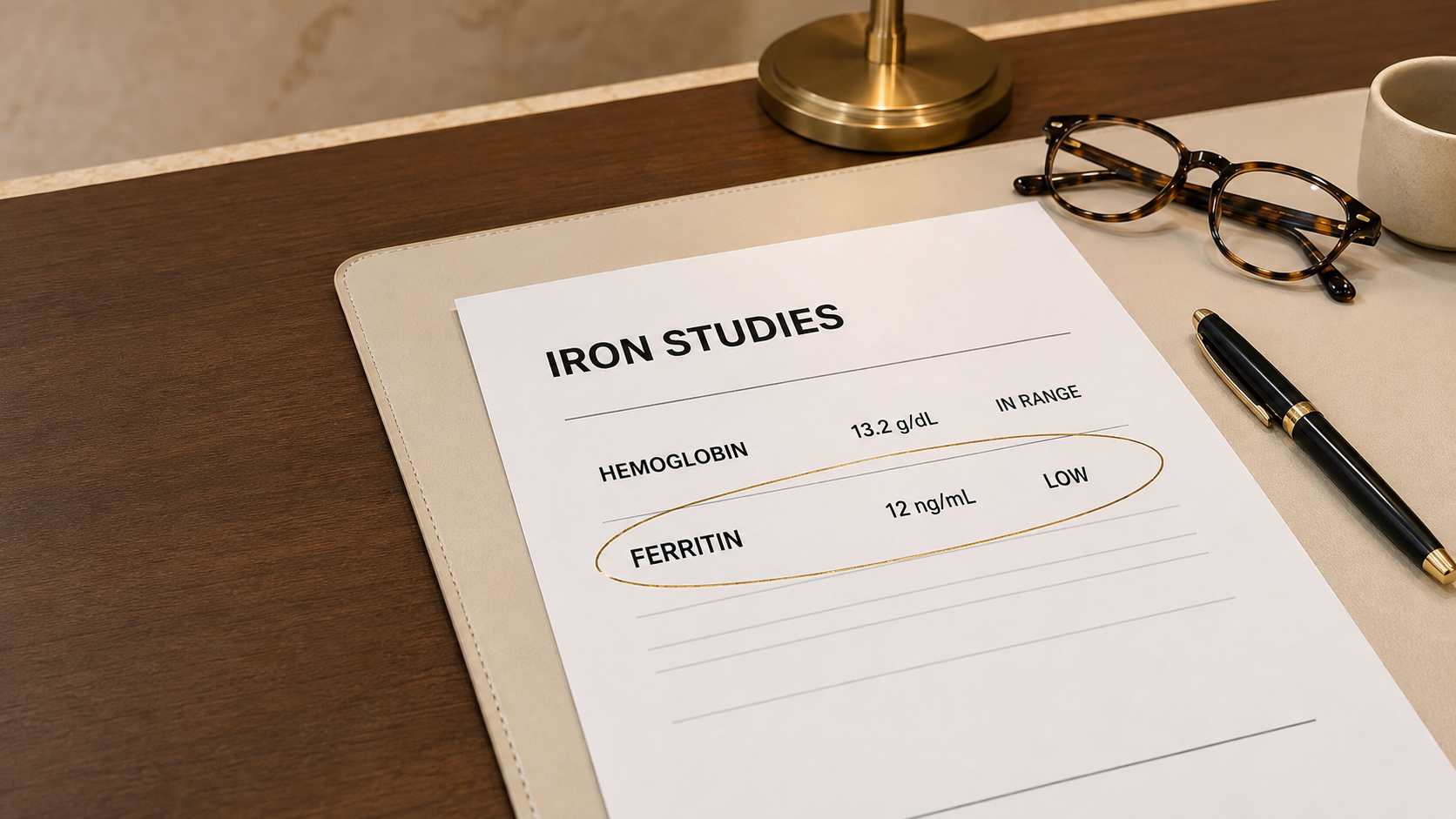
Your CBC came back normal. But by noon, your body feels heavy, your focus disappears and even a full night’s sleep does not feel restorative.
That gap matters.
Iron stores can decline before hemoglobin falls. This means a woman may have depleted iron stores even when her standard blood count does not show anemia. Ferritin helps us understand the stored-iron picture, but the number must be interpreted alongside symptoms, menstrual history and other laboratory findings.
Your blood count can be normal while your iron stores are not.
Still exhausted despite a normal CBC?
A comprehensive psychiatric evaluation can review your symptoms, medical history and relevant laboratory findings together.
You might recognize yourself if...
- You feel exhausted even after sleeping.
- Your thinking feels slower or less clear than usual.
- Stairs, exercise or ordinary activity leave you unusually winded.
- Your legs feel restless when you are trying to sleep.
- You are noticing more hair shedding than usual.
- Your periods are heavy, prolonged or closer together.
- Your symptoms became more noticeable during pregnancy or postpartum recovery.
These symptoms do not automatically mean that your ferritin is low. Thyroid dysfunction, vitamin deficiencies, sleep disorders, medication effects, depression and other medical conditions can produce similar symptoms. A thoughtful evaluation helps separate what may be contributing from what only appears similar on the surface.
Can ferritin be low when your CBC is normal?
Yes. A complete blood count measures values such as hemoglobin and hematocrit. Ferritin is a separate test that reflects stored iron.
Iron stores may decline before hemoglobin falls enough to meet the definition of anemia. This is sometimes called iron deficiency without anemia.
The World Health Organization uses a ferritin level below 15 ng/mL as a threshold for iron deficiency in otherwise healthy adults. Some clinical reviews use a threshold below 30 ng/mL. There is no single “optimal” ferritin number that applies to every woman.
Ferritin can also rise in response to inflammation, infection and certain medical conditions. A ferritin result that appears normal or elevated may therefore need to be interpreted alongside transferrin saturation, inflammatory markers, symptoms and medical history.
Why women are particularly vulnerable
Women may lose iron through heavy or prolonged menstrual bleeding. Iron requirements also increase during pregnancy, and blood loss during delivery can affect iron stores during postpartum recovery.
Other possible contributors include:
- Frequent blood donation
- Limited dietary iron intake
- Gastrointestinal blood loss
- Difficulty absorbing iron
- Certain gastrointestinal conditions
- Medications that affect absorption
- A history of pregnancy or heavy menstrual bleeding
Finding the reason matters. Replacing iron without understanding why it became depleted can leave the original problem unaddressed.
How low iron stores may affect more than energy
Iron supports oxygen delivery, energy metabolism and normal neurological function. When iron stores are depleted, some women experience fatigue, exercise intolerance, difficulty concentrating, restless legs, headaches, dizziness or increased hair shedding. Persistent exhaustion is also reviewed on our Burnout & Chronic Fatigue page.
Low mood, irritability and reduced motivation can overlap with iron deficiency, but they are not specific to it. Depression & Low Mood and anxiety deserve a complete psychiatric evaluation even when a possible biological contributor is being investigated.
At The Root Cause NP, laboratory findings are used to inform psychiatric care, not replace it.
The tests that provide a fuller picture
Depending on your symptoms and history, an iron evaluation may include:
- Complete blood count
- Ferritin
- Serum iron
- Total iron-binding capacity
- Transferrin saturation
- CRP when inflammation is suspected
- Vitamin B12 and folate when clinically indicated
- Thyroid testing when clinically indicated
No single laboratory value should be interpreted in isolation. The most useful answer comes from reviewing the results alongside your symptoms, menstrual history, medications, nutrition, sleep and overall health. More on how we approach testing is on our Root Cause Lab Testing page.
What happens when low iron stores are found?
Treatment depends on the cause, severity of the deficiency, symptoms, medical history and ability to tolerate oral iron.
Some patients may be treated with oral iron. Others may require additional medical evaluation or a different treatment plan. Iron should not be started based only on symptoms because unnecessary supplementation can cause side effects and may be harmful.
The goal is to identify what is contributing, treat it appropriately and monitor the response.
When your symptoms deserve a closer look
If your blood count was reported as normal but you remain exhausted, foggy or unlike yourself, it may be worth reviewing the complete picture.
A ferritin test may provide useful information, but it is one part of a comprehensive Psychiatric Evaluation. Your symptoms deserve careful attention rather than an automatic assumption that they are caused by stress, age or a psychiatric diagnosis alone.

About the author
Meet Mabel — Mabel C. Rodriguez, PMHNP-BC
Board-Certified Psychiatric Mental Health Nurse Practitioner
Clinical References
- World Health Organization. Use of ferritin concentrations to assess iron status in individuals and populations.
- Sholzberg M, et al. Diagnosis and management of iron deficiency in females.
- Pasricha SR, et al. Iron deficiency.
- Vaucher P, et al. Effect of iron supplementation on fatigue in nonanemic menstruating women with low ferritin.
- Centers for Disease Control and Prevention. Recommendations to Prevent and Control Iron Deficiency in the United States.
This article is for educational purposes only and is not a diagnosis or a substitute for individualized medical care. Laboratory testing and treatment should be based on your history, symptoms and evaluation by a qualified healthcare professional.
Your exhaustion deserves a closer look.
If fatigue, brain fog or low mood has continued despite being told that your labs are normal, we can review the fuller picture together.
Private-pay psychiatric care for women in Palm Beach County. Telehealth is available where clinically and legally appropriate.
Continue reading
- Brain Fog in Women: Causes, Symptoms and When to Seek Help
- Normal Thyroid Labs but Still Feel Unwell? What Women Should Know
- Functional Psychiatry and PMDD Treatment: What Helps—and What Labs Can’t Tell You
Explore our functional and integrative psychiatry approach and what a psychiatric evaluation includes.